
Meet guest blogger Scott Ballard—herpetologist (scientist specializing in reptiles and amphibians), field biologist, and all-around champion of the creatures most people fear.
Rush to Judgment
When someone spots a snake and calls it in as a rattlesnake, I usually ask how they identified it. The answer is almost always the same: “It was rattling its tail.”
That’s when I follow up: “Was it actually rattling, or just vibrating its tail?”
Most people pause—because there is a difference. You can’t rattle your tail if you don’t have a rattle.
Only true rattlesnakes have the segmented structure that creates that distinct buzzing sound. However, many non-venomous snakes will rapidly vibrate their tails when threatened. In dry leaves or grass, this can sound remarkably similar to a rattle. It’s a clever survival strategy—one of many ways snakes bluff to avoid becoming a predator’s next meal.
Because a non-venomous snake’s bite is no worse than being pricked by a rose bush, many harmless snakes rely on mimicry when faced with a potential predator (like you!). They may flatten their heads to appear more triangular or coil defensively to look more intimidating. These behaviors often lead to misidentification, with non-venomous snakes being mistaken for venomous ones.
Aren’t Most Snakes Venomous?
No—far from it.
Illinois is home to about 40 species of snakes, but only four are venomous. Of those, two are considered threatened or endangered. Even more important, the distance they can travel within the state are quite limited.
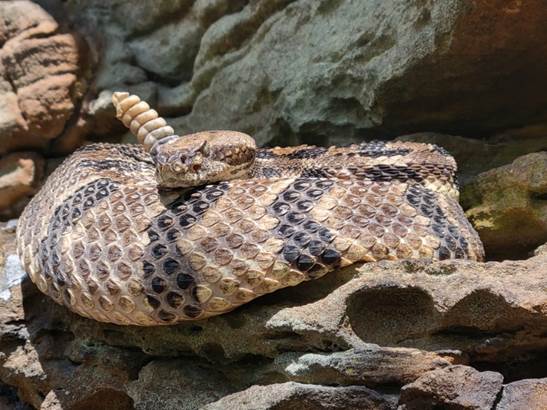
- Timber rattlesnakes (image below) are found in extreme northwestern Illinois and along river bluffs from near St. Louis southward. Their population has declined significantly over time.
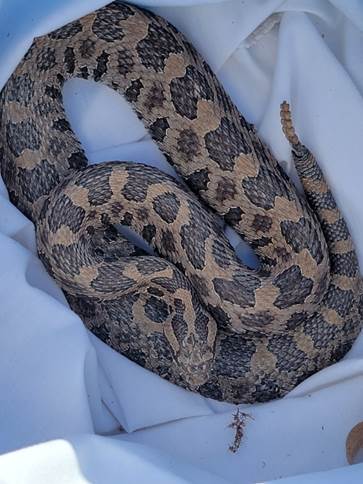
- Eastern massasaugas (image below) are extremely rare, limited to just a few locations. They are considered both state-endangered and federally threatened.
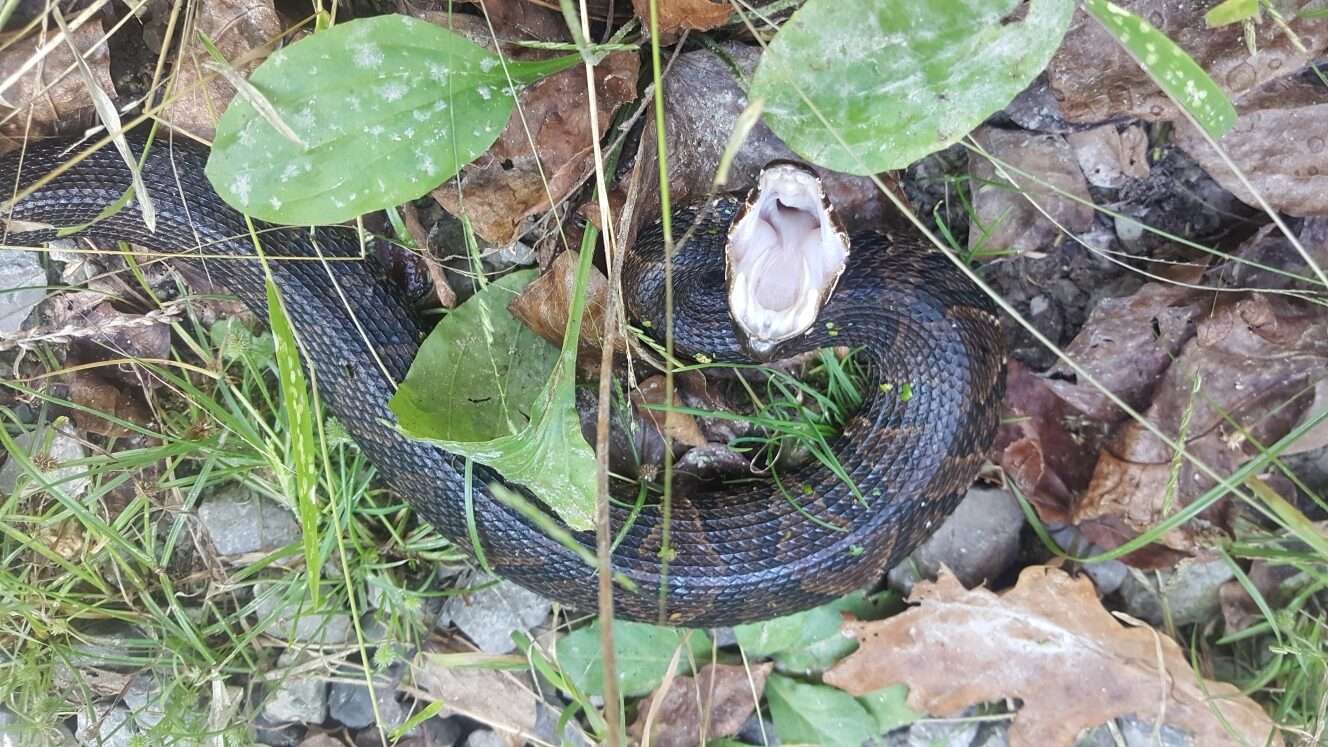
- Cottonmouths (water moccasins; image below) are found only in the far southern part of the state, south of Route 13.
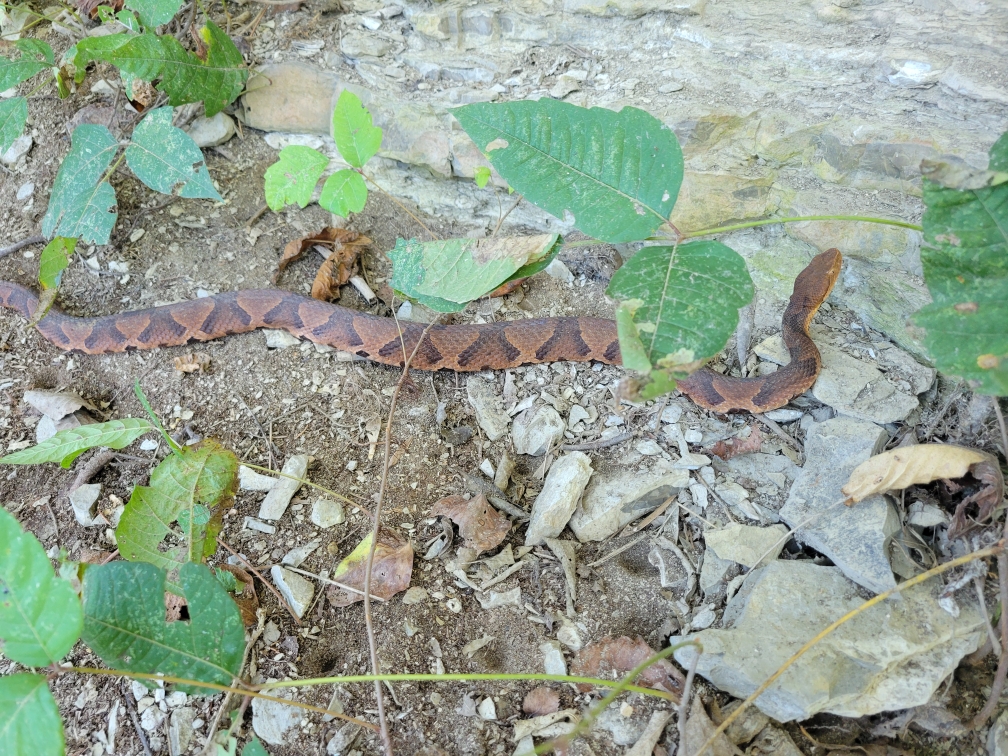
- Copperheads (image below) inhabit rocky areas and bluffs from the lower Illinois River valley down into southern Illinois.
FACT: The likelihood of encountering a venomous snake in Illinois is actually quite low.
Snakes: Nature’s Pest Control
Whether venomous or not, snakes play a vital role in the ecosystem. In a calendar year, a single adult native snake can consume nine pounds of mice and rodents, enough to fill up a pillowcase. That means fewer pests damaging crops, invading homes, or spreading disease.
Rodents are also major carriers of ticks, which transmit illnesses like Lyme disease and Rocky Mountain spotted fever. By controlling rodent populations, snakes indirectly help reduce these risks.
Living Alongside Snakes
Snakes are not aggressive toward humans. Like most wildlife, they prefer to avoid us. Bites typically occur only when a snake is handled, stepped on, or feels trapped.
If you see a snake in your yard, it’s likely there for a reason—usually following a food source like rodents or insects. In most cases, the best course of action is simply to leave it alone. Once it has eaten, it will move on.
Word of Caution: Non‑native snakes are routinely kept by hobbyists and made available through the pet trade (like the African Gaboon Viper). Occasionally those pets escape their captive environment.
If you see a snake that you would like to have identified, you can text a photo of it (taken from a safe and respectful distance) to Scott Ballard at 618-694-3398.
If you are bitten by a snake, follow these important steps:
- Stay calm and still.
- If it’s safe to do so, take a picture of the snake.
- Call 911 immediately if it is a venomous snake. If you’re sure it’s a non-venomous snake, call IPC’s helpline, 1-800-222-1222.
- Try to remember features of the snake such as body shape and color. DO NOT re-approach the snake.
- Apply a clean, dry dressing to the bite mark. (DO NOT apply ice, heat or a tourniquet around the bite mark as this may worsen the injury.)
- Remove any jewelry such as rings, bracelets or watches.
About the author: Scott Ballard has spent 35 years at the Illinois Department of Natural Resources, working from Springfield through southern Illinois. He specializes in endangered and threatened species recovery and has partnered with organizations like the U.S. Fish and Wildlife Service. Although wild about snakes, his work spans everything from bats and owls to spiders. When a call comes in about a so-called nuisance animal (non-game; stuff you don’t hunt), Scott’s the guy who shows up. For him, protecting wildlife isn’t just a job—it’s his 24/7/365 lifetime passion.
The Illinois Poison Center is a nonprofit health service that provides the people of Illinois with comprehensive and trusted information and treatment advice on potentially harmful substances via a free, confidential 24-hour helpline (1-800-222-1222) staffed by specially trained physicians, nurses and pharmacists. Request a free Safety Packet (includes sticker, magnet, first aid tips; available in English and Spanish).
