
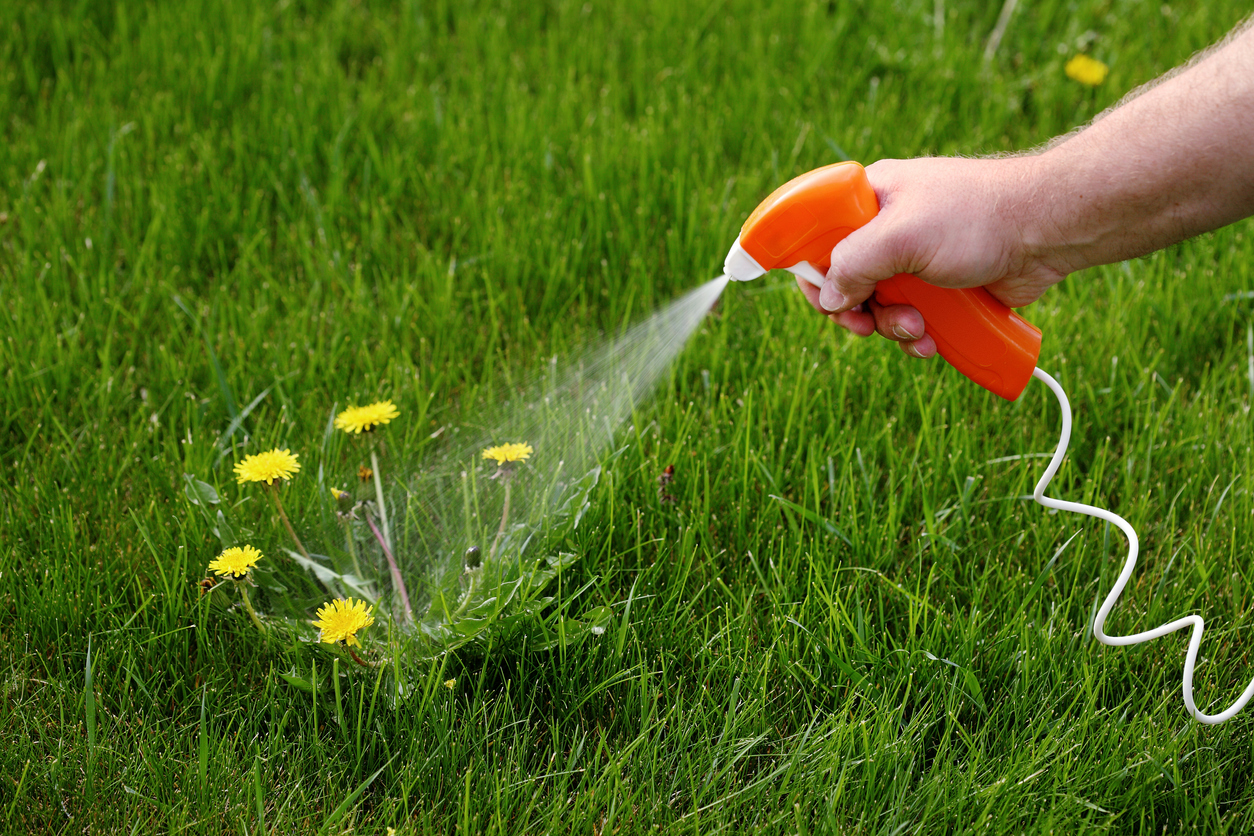
Warm weather brings blooming flowers, ripe vegetables… and plenty of pesky weeds. Whether you’re growing tomatoes, roses or a backyard jungle, most gardeners agree that weeds are not welcome.
To keep the garden looking great, many people reach for herbicides—commonly known as weed killers. But as helpful as these products are, accidents can happen. The Illinois Poison Center (IPC) receives just over 200 calls each year related to herbicide exposures, both unintentional accidents and intentional exposures. Many of the cases involve small children who have ingested the product from the container. In some cases, children have spilled the product on their skin or inhaled it when it was sprayed.
Here are the herbicides we commonly get calls about—and what you need to know about them:
Chlorphenoxy Herbicides (like 2,4-D)
These are among the most popular weed killers used on lawns and gardens. 2,4-D is a go-to ingredient found in many store-bought products. It works by disrupting plant growth—especially broadleaf weeds like dandelions, clover and thistles—while sparing most grasses.
Interesting Fact: 2,4-D was one of the components of Agent Orange used during the Vietnam War. It was combined with another herbicide (2,4,5-T) and a toxic dioxin compound (TCDD).
Most everyday exposures—like getting some on your skin or breathing in a little mist—are unlikely to cause any harm. However, larger intentional ingestions can lead to serious symptoms such as nausea, vomiting, dizziness, muscle weakness, poor coordination, or even seizures and coma.
Cool Trivia: Dr. Antonia Nemanich from the IPC medical toxicology team earned national recognition in 2024 for diagnosing a case of 2,4-D poisoning in a golf course worker.
Glyphosate
You’ve probably seen this one at the store—it’s the main ingredient in Roundup and other common weed killers. Glyphosate is a non-selective herbicide, meaning it doesn’t just kill weeds—it can also kill lawn grass and other garden plants if you’re not careful.
Thankfully, most unintentional exposures to glyphosate are mild. Minor skin contact or a small accidental taste usually requires only simple first aid at home. Larger or deliberate ingestions, however, can cause:
- Nausea, vomiting and diarrhea
- Mouth and stomach irritation or ulcers
- Lung injury or liver issues in severe cases
Serious poisonings are rare, but if someone swallows a significant amount, medical attention is needed right away.
Diquat and Paraquat
These two are the most concerning from a poison specialist’s perspective. They are less common than 2,4-D and glyphosate, but because of their high toxicity, diquat and paraquat are very worrisome exposures.
Diquat
Used to control weeds and grasses, diquat can irritate the skin but is not usually dangerous if washed off quickly and no symptoms develop. However, if someone swallows diquat, it can cause:
- Burns in the mouth and stomach
- Kidney damage
- Life-threatening organ failure at high doses (especially more than 12 grams)
Paraquat
Mostly used in agriculture, paraquat is highly toxic—we’re not kidding. It’s so dangerous that even small amounts can cause severe poisoning. If ingested, paraquat can:
- Burn the mouth, throat and stomach—sometimes so badly a hole, or perforation, in the stomach occurs
- Damage major organs (heart, liver, kidneys, brain)
- Cause delayed lung damage with severe fibrosis or scarring and respiratory failure
This is a product best left to trained professionals. Never store it—or any herbicide—in unlabeled or repurposed containers like beverage bottles.
How to Use Herbicides Safely
Whether you’re pulling a few weeds or treating the whole lawn, follow these tips:
- Read the label carefully for instructions on mixing, applying and storing the product.
- Wear protective gear, including long sleeves, gloves, closed-toe shoes and eye protection.
- Avoid spraying on windy days, and walk away from misty or freshly treated areas.
- Store safely: Keep herbicides in their original containers, in a cool, dry place away from kids and pets.
Herbicides can be helpful tools in the quest for the perfect garden, but only when used with care. A little prevention goes a long way.
If you’re ever unsure about a product or if someone is exposed to an herbicide unexpectedly, call the Illinois Poison Center at 1-800-222-1222. Our pharmacists and nurses are available to help 24/7.
Want a free Poison Safety Packet with a sticker, magnet and first aid tips? Click here to request yours today and keep your home safer year-round.
